
- Home
- Conditions & Treatments
- Scoliosis
Scoliosis Treatment in Singapore
Scoliosis
Scoliosis is an abnormal lateral curvature of the spine that can develop during childhood, adolescence, or adulthood. In many cases, it is mild and manageable without surgery. In others, the curve progresses to a degree that affects posture, causes pain, or, in more significant cases, places pressure on the lungs and other internal organs.
Getting the right diagnosis early and monitoring the condition appropriately is what determines whether surgery becomes necessary. At Orthopaedics International, our spine specialists assess and treat scoliosis across all age groups, from adolescent idiopathic scoliosis to adult degenerative scoliosis.


Scoliosis Across Different Age Groups
Scoliosis can develop at any stage of life. The type, cause, and treatment approach differ depending on when it presents.
Children
Congenital Scoliosis
A curvature present from birth, caused by abnormal vertebral development during foetal growth.
Congenital scoliosis requires close monitoring from an early age. Because the abnormality is structural, it does not resolve on its own and may worsen as the child grows. Surgical intervention may be needed earlier than in other types of scoliosis, depending on the location and severity of the curve.
Adolescents
Adolescent Idiopathic Scoliosis
The most common form of scoliosis, typically emerging between ages 10 and 18 during periods of rapid growth.
No single cause has been identified, though the condition tends to run in families. Girls are more likely than boys to develop curves that progress to a degree requiring treatment. Mild curves are monitored with regular imaging. Moderate curves may be managed with bracing to slow progression. Significant curves that continue to develop are assessed for surgical correction.
Adults
Adult Degenerative Scoliosis
A curvature that develops in adulthood as a result of age-related deterioration of the spinal discs and facet joints.
Also referred to as de novo scoliosis, this form most commonly affects the lumbar spine. Unlike adolescent scoliosis, it is frequently accompanied by symptoms from the outset — including back pain, leg pain, and nerve compression symptoms such as numbness or weakness in the legs. Treatment focuses on managing symptoms as well as addressing the curve where necessary.
Any Age
Neuromuscular Scoliosis
A spinal curvature associated with an underlying neurological or muscular condition such as cerebral palsy or muscular dystrophy.
Neuromuscular scoliosis can develop at any age and tends to progress more rapidly than idiopathic scoliosis. The underlying condition influences both the rate of progression and the surgical approach. These cases are typically more complex to manage and benefit from a multidisciplinary assessment.
Non-Surgical Scoliosis Treatment Options
Observation and monitoring
For mild curves, regular clinical review and imaging to track progression. In children and adolescents, treatment is initiated if the curve develops beyond a threshold appropriate for the patient’s age and skeletal maturity.
Bracing
Recommended for moderate curves in adolescents who are still growing. A brace does not correct an existing curve but can slow or halt further progression, reducing the likelihood of surgery being required. Bracing is not typically used in adults.
Physiotherapy
Targeted exercise can help manage pain, improve posture, and maintain mobility. More commonly used in adults with mild to moderate curves, though it may also complement other treatments in adolescents.
Spinal injections
Injections into the epidural space, facet joints, or around specific nerve roots to manage pain and assist with diagnosis. Primarily used in adults where nerve compression or localised pain is a significant symptom.
When Do You Need Scoliosis Surgery?
Surgery is not the first line of treatment for most scoliosis patients. Monitoring, bracing, and physiotherapy are appropriate for many cases. Surgery is considered when:
The curve has progressed beyond a critical threshold — In adolescents, surgical correction is generally considered when the Cobb angle reaches approximately 40 to 50 degrees. In adults, curve magnitude is weighed against symptoms.
Bracing has not been effective — Where bracing has failed to prevent progression past the surgical threshold in adolescents, surgical correction is the next step.
Nerve compression is causing neurological symptoms — Leg pain, numbness, weakness, or difficulty walking that has not responded to conservative management may indicate that decompression or correction surgery is needed.
Pain cannot be managed by other means — Persistent back or leg pain that has not responded to physiotherapy, medication, or spinal injections may require surgical intervention, particularly in adult degenerative scoliosis.
The curve is affecting organ function — In severe cases, scoliosis can restrict chest wall expansion and reduce lung capacity. Surgical correction in these cases aims to prevent further respiratory deterioration alongside stabilising the spine.
The decision to proceed with surgery is made collaboratively between the patient and the surgeon, with a clear discussion of the goals, risks, and expected recovery.
Surgical Scoliosis Treatment Options
Scoliosis correction surgery
The primary surgical approach for significant spinal curvature. Spinal instrumentation, typically rods, screws, and hooks, is attached to the vertebrae to apply corrective force and straighten the spine, which is then fused in the corrected position.
Spinal fusion
Performed as part of scoliosis correction surgery, spinal fusion permanently joins two or more vertebrae using bone graft material, which over time grows into a solid union. Fusion locks the corrected spinal segments in place and prevents the curve from recurring. The number of vertebrae fused depends on the extent and location of the curve.
Decompression surgery
In adults, scoliosis is frequently accompanied by spinal stenosis, narrowing of the spinal canal or the passages through which nerve roots exit the spine. Where nerve compression is the primary source of symptoms, decompression procedures such as laminectomy or laminotomy may be performed to relieve pressure on the spinal cord or nerve roots.
When Should You See a Scoliosis Specialist
Children and Adolescents
In younger patients, pay attention to visual signs and seek a specialist assessment if you notice any of the following in your child:
- Uneven shoulder height
- One shoulder blade that protrudes more than the other
- An uneven waistline or one hip sitting higher than the other
- A rib prominence when bending forward
A curve that has already been identified and appears to be progressing also requires prompt review. Management options are broader when the condition is caught early, particularly in patients who are still growing.
Adults
In adults, scoliosis is more likely to present with symptoms than in younger patients. Consider a specialist consultation if you are experiencing:
- Persistent back pain that has not responded to conservative treatment
- Leg pain or cramping that worsens with walking
- Numbness or weakness in the legs
- A noticeable or progressive change in posture
A known diagnosis of scoliosis that has not been reviewed in some time is also worth reassessing, particularly if your symptoms have changed since your last consultation.
Patient / Case Anecdotes
The following cases illustrate the range of conditions our spine specialists treat and the outcomes patients have experienced. The results shown are specific to that case, and may not apply to other cases with similar diagnoses.
Patient details have been anonymised.


Chronic pain from scoliosis
Long Segment Fusion
Ms A, 68-year-old lady with chronic back pain and pain over right flank to right front of the thigh. As such she is unable to walk for prolonged periods of time. She started physiotherapy with some improvement but is still unable to stand for long due to the right flank pain, which is due to her ribcage impingement on the iliac bone. She underwent long segment fusion with deformity correction and her right sided flank pain resolved. She is also able to walk for longer periods post-surgery.
Relief from four years of back pain
Ms A, 68-year-old lady with chronic back pain and pain over right flank to right front of the thigh. As such she is unable to walk for prolonged periods of time. She started physiotherapy with some improvement but is still unable to stand for long due to the right flank pain, which is due to her ribcage impingement on the iliac bone. She underwent long segment fusion with deformity correction and her right sided flank pain resolved. She is also able to walk for longer periods post-surgery.
Scoliosis correction in a teenage patient
Corrective Scoliosis Surgery
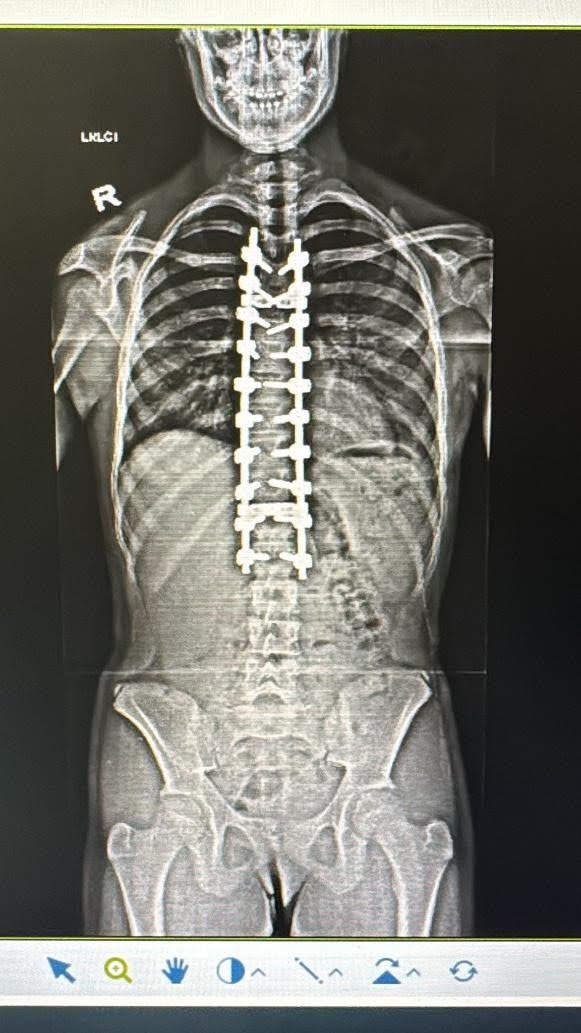
A 14-year-old girl was brought in after her family noticed a progressive hump on her right side and an uneven shoulder line over six months. Clinically she had a large right thoracic hump and elevated right shoulder. X-rays confirmed a moderately severe thoracic curve consistent with Adolescent Idiopathic Scoliosis.
Dr. Tan Chong Tien performed a surgical correction with instrumentation and fusion from T4 to L1, using a navigation system (O Arm) for precise pedicle screw placement and intraoperative spinal cord monitoring throughout the procedure. The surgery was done with very high degree of safety with regards to her neurological function.
The procedure resulted in an excellent correction of her spinal curve.
Scoliosis correction in a teenage patient
A 14-year-old girl was brought in after her family noticed a progressive hump on her right side and an uneven shoulder line over six months. Clinically she had a large right thoracic hump and elevated right shoulder. X-rays confirmed a moderately severe thoracic curve consistent with Adolescent Idiopathic Scoliosis.
Dr. Tan Chong Tien performed a surgical correction with instrumentation and fusion from T4 to L1, using a navigation system (O Arm) for precise pedicle screw placement and intraoperative spinal cord monitoring throughout the procedure. The surgery was done with very high degree of safety with regards to her neurological function.
The procedure resulted in an excellent correction of her spinal curve.
Why Choose Our Orthopedic Doctors
Many of our doctors pursued advanced training overseas, gaining exposure to complex cases, cutting-edge surgical techniques, and international best practices in orthopaedic care.
Beyond clinical work, our specialists are active contributors to the orthopaedic community. They serve as speakers at conferences, educators shaping future surgeons, reviewers for respected medical journals, and innovators advancing surgical techniques.
This commitment ensures our patients benefit from a wealth of experience, global perspectives, continuous learning, and leadership in orthopaedics, all delivered with clarity and professionalism.
Our Scoliosis Specialists
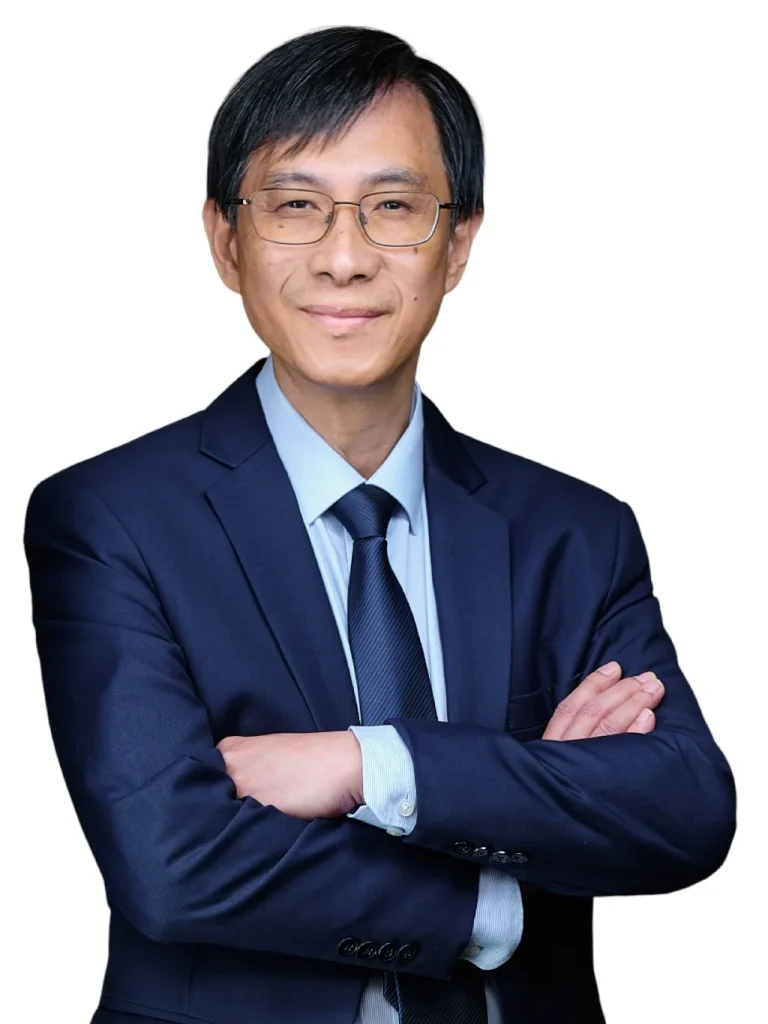
Specialist Orthopaedic Surgeon
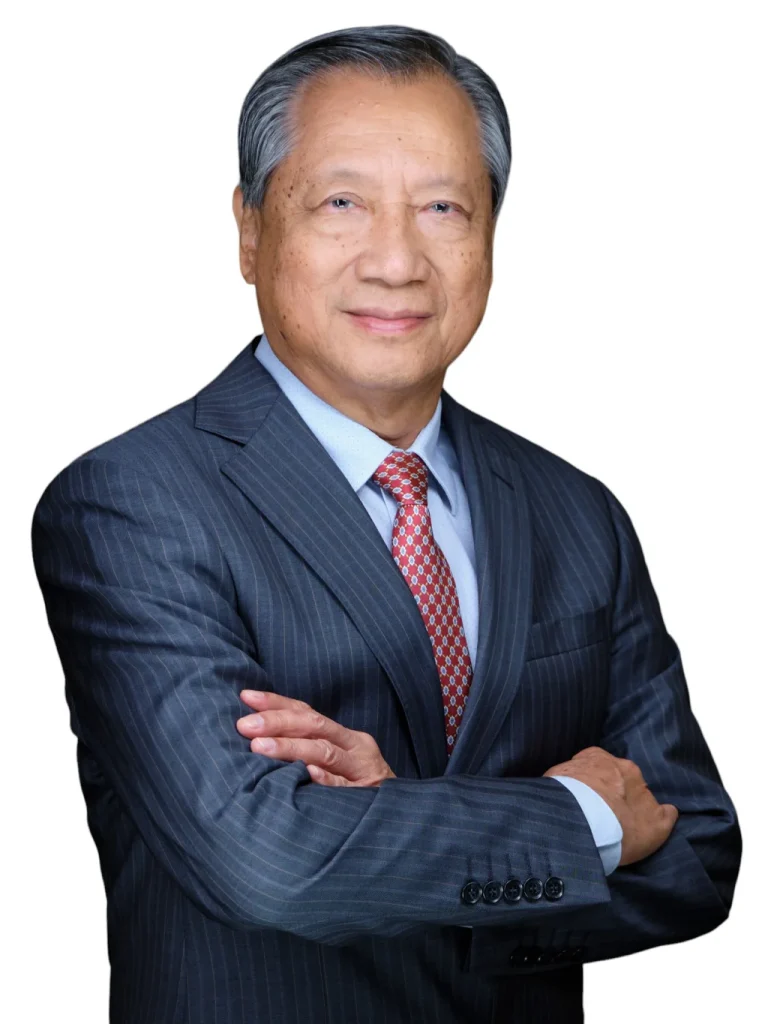
Dr. Tan Chong Tien has over 20 years of experience in orthopaedic and spine surgery, with scoliosis forming a core part of his surgical practice. He served as Director of Spine Service at Singapore General Hospital from 1989 to 2005, where he established the spine subspecialty and introduced a number of spinal procedures.
Find Dr. Tan At
Specialist Orthopaedic Surgeon
Dr. Ngian Kite Seng manages scoliosis alongside a broad range of spinal and orthopaedic conditions. His published research includes work on cervical fusion in rheumatoid arthritis and burst fractures of the lumbar spine. He is an International Affiliate Member of the American Association of Orthopaedic Surgeons (AAOS) and a member of AO Spine.
Find Dr. Ngian At
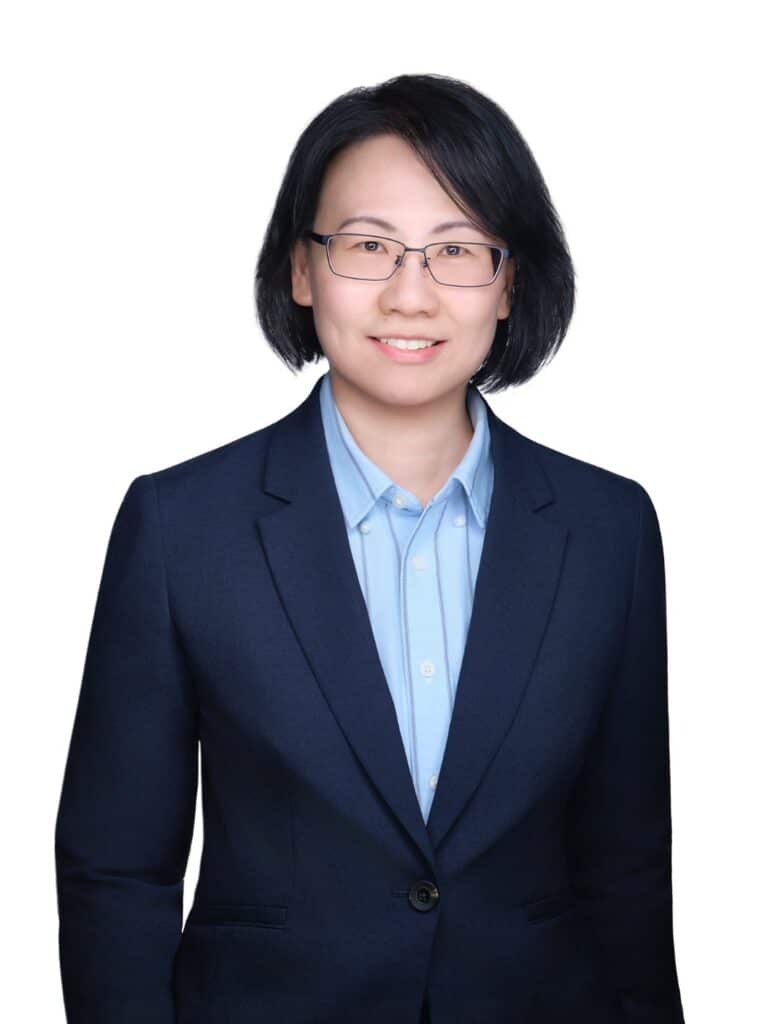
Specialist Orthopaedic Surgeon
Dr. Fong Poh Ling is an esteemed Specialist Orthopaedic Surgeon who holds the distinction of being Singapore’s first female orthopaedic spine surgeon. Dr. Fong specializes in complex spinal reconstructions, total disc replacements, and advanced minimally invasive techniques. Beyond her clinical excellence in treating complex spine injuries, she is a driving force for clinical innovation, championed by her pioneering work in Enhanced Recovery After Surgery (ERAS) protocols and spinal cord injury quality improvement projects.
Find Dr. Fong At
Hear from our patients
Disclaimer:
All reviews displayed on The Orthopaedics International Specialist Group’s website are provided directly by our patients via our Patients Experience Survey.
We adhere strictly to the guidelines set forth by Singapore’s Healthcare Services (Advertisement) Regulations 2021 (“Advertisement Regulations”) to ensure the authenticity and integrity of all patient feedback.

JP
1 year ago
Excellent. Dr Ong Joo Haw had a warm disposition, which was reassuring for my son, the patient. He asked clear questions and performed a detailed physical examination to rule out certain things. I appreciated his methodical approach. He explained the various possibilities for my son’s pain in clear, layman, terms. All in, a pleasant experience.
A.H.
1 year ago
Dr Leslie Leong provided a sincere and undivided attention to my son’s injury, and I also want to compliment the nurse (Chris Quek), she is very attentive and very caring towards the patient and family member. Good job
C.L.
1 year ago
Extremely positive experience. Dr Tan Chong Tien is extremely skilful and experienced. He was able to explain my condition in an easy to understand manner. He is also very empathetic and understanding which helps when you’re in discomfort.
B.F
1 year ago
My overall experience with Dr Patrick Goh and his staff was excellent. I was attended to promptly, the staff were warm and reassuring, Dr Goh explained the treatment and procedure clearly to me before administering it. Dr Goh is my “go-to” Sports physician.
E.L
1 year ago
Dr Ivan Chua is excellent, very knowledgeable, good listener and understands patient’s need. Receptionist is also very kind and polite
O.Pl
1 year ago
Dr Chan is a patient, knowledgeable and caring doctor. Always cheerful and going that extra mile to explain any questions posed. His staff are pleasant and most helpful. A wonderful and great team.
Scoliosis Specialists & Surgery in Singapore
Get a Consultation for Scoliosis Treatment
If you or your child has been diagnosed with scoliosis, or if you have noticed signs that suggest a spinal curvature, a consultation will give you a clear picture of the condition and what your options are. Bring any existing X-rays or imaging and our spine team will work through them with you.